Archived SI output (machine-generated)
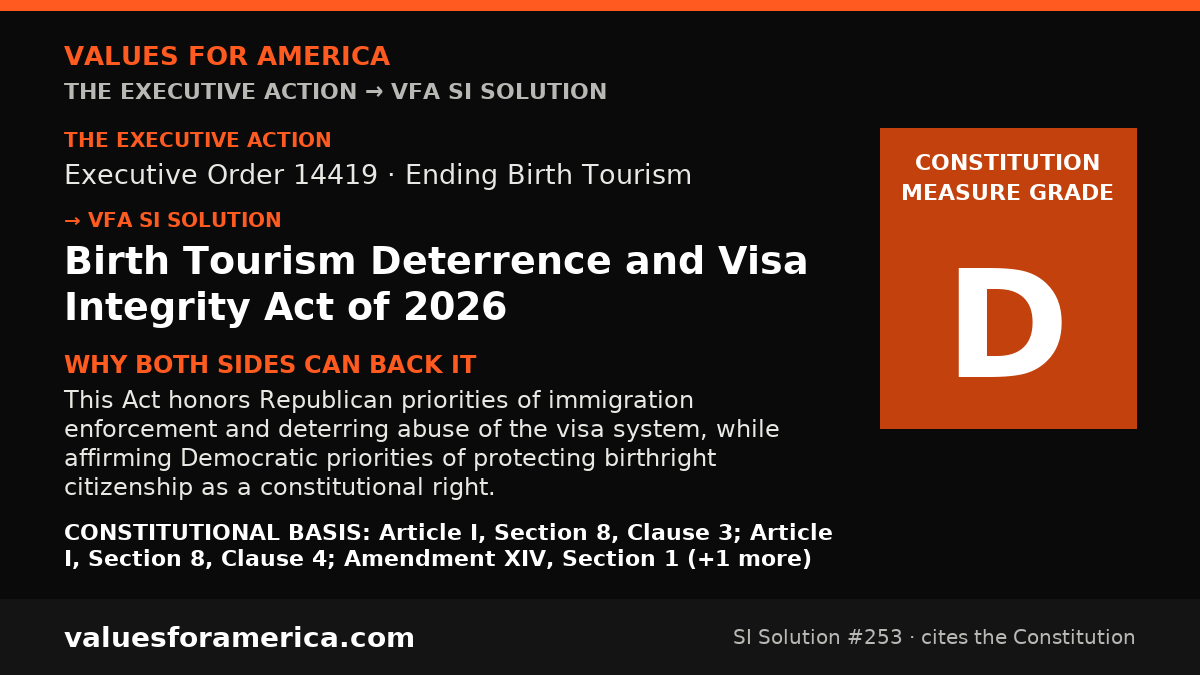
Birth Tourism Deterrence and Visa Integrity Act of 2026
Archived SI output (machine-generated) · No editorial review recorded
This historical SI draft was machine-generated by software and has no editorial review time on record. Verify its factual and legal claims against the original source before relying on it.
Ending Birth Tourism
Executive Order
Birth Tourism Deterrence and Visa Integrity Act of 2026
Deter foreign nationals from traveling to the United States for the primary purpose of giving birth so that their child acquires automatic U.S. citizenship (birth tourism).
Constitutional concerns with the original
- The 14th Amendment Citizenship Clause (Section 1) grants citizenship to all persons born in the United States and subject to its jurisdiction, which includes children of non-citizen parents (except diplomats, enemy aliens, etc.). An executive order attempting to deny citizenship to such children exceeds Article II authority and would violate the Constitution.
- Fifth Amendment Due Process would be implicated if citizenship is denied to a child based solely on parental intent, as the child's own status is at stake.
- Congress cannot alter birthright citizenship by statute; only a constitutional amendment could change the 14th Amendment's scope. However, Congress can regulate immigration and visa issuance to deter the practice.
Solution text
Operative provisions
Bipartisan rationale
This Act honors Republican priorities of immigration enforcement and deterring abuse of the visa system, while affirming Democratic priorities of protecting birthright citizenship as a constitutional right. By legislating rather than acting unilaterally, Congress respects the separation of powers and avoids the constitutional crisis of an executive order overriding the 14th Amendment. Both parties prefer this approach because it provides clear, judicially reviewable standards and terminates after five years, forcing Congress to reassess. It also avoids the protracted litigation that would accompany an unconstitutional executive order.
Constitutional citations
- → Article I, Section 8, Clause 3 (Commerce Clause)
- → Article I, Section 8, Clause 4 (Naturalization and Uniform Rule of Citizenship)
- → Fourteenth Amendment, Section 1 (Citizenship Clause)
- → Fifth Amendment Due Process Clause
Article I, Section 8, Clause 3 Article I, Section 8, Clause 4 Amendment XIV, Section 1 Amendment V
Report an error in this Solution

Citizen Consensus
“Do you support this VFA SI Solution?”
One vote per verified account; you can change it any time. Only verified accounts count, results publish once 30 verified people have voted, and state and district results count only people who attested a home ZIP code. How this works.
Email verification is not switched on yet, so no vote counts toward results yet. Votes cast now are saved and count once the voter verifies their email address.
Sign in or create a free account to vote.
Add a short reason (optional)
/280 · no links or contact details · reasons are reviewed before anyone sees them, and many never are shown.
Your vote is saved but held out of published results by an automated integrity check (for example, several accounts voting from one browser).
Your vote is saved. It will count once you verify your email address. Verify on your account page.
Your vote counts nationally. Add your home ZIP code to count in your state and district too.
Your vote counts nationally and in .
Reason saved privately; it is shown only if it passes review.
Verified participants nationwide · n =
Self-selected participants, not a random sample; ± is the 95% sampling margin.
Not enough verified votes yet. Results publish at verified votes.
A sudden surge of votes on this item was flagged and is under review; votes from new accounts in that surge are held out until it is resolved.
Related on VFA
Generated by VFA SI Solutions · 2026.08.13 06:01 UTC · ← Back to the Republic