SI-generated Constitutional Solution
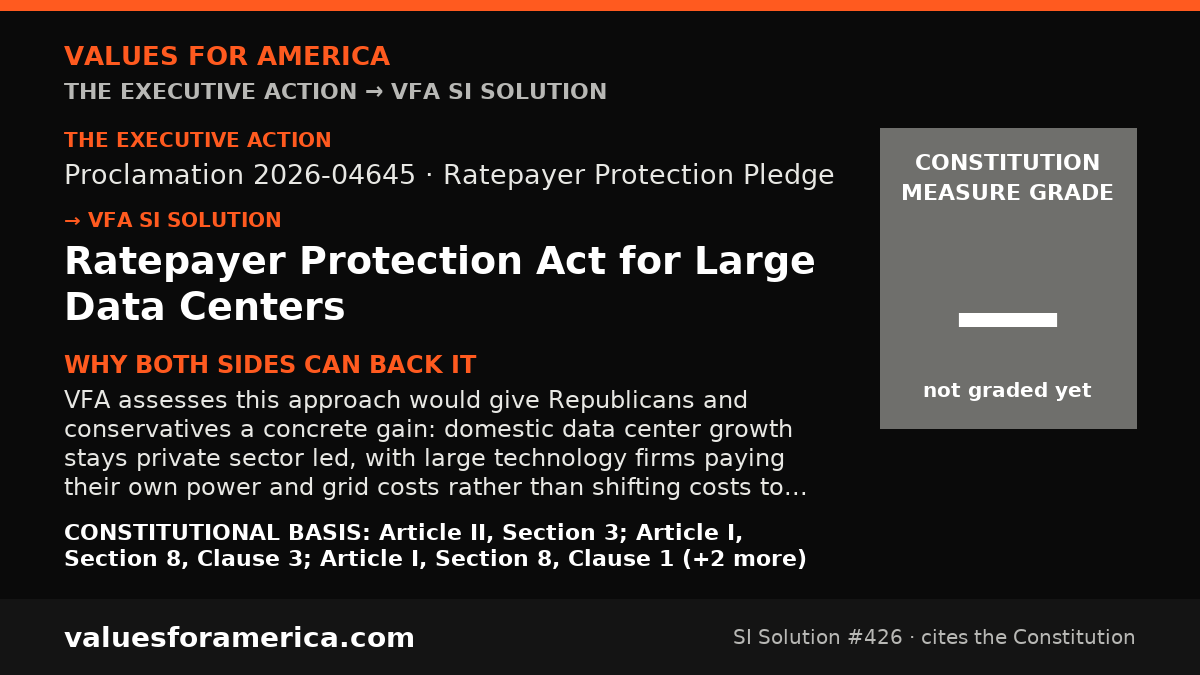
Ratepayer Protection Act for Large Data Centers
SI-generated · passed automated checks (Constitution citation, source verification, independent SI critic) · not individually reviewed by a person · Report an error: hello@valuesforamerica.com
Ratepayer Protection Pledge
Proclamation
Ratepayer Protection Act for Large Data Centers
Support large domestic data centers for cloud computing and artificial intelligence while keeping household power bills from rising because of new data center demand.
Constitutional concerns with the original
- A proclamation alone cannot impose binding payment duties on private firms or utilities without a statute
- Retail rate setting has long been led by the states, so federal action must respect the Tenth Amendment and state authority
- Any future federal charge or cost rule must satisfy Fifth Amendment Due Process with notice and a chance to be heard
Solution text
Operative provisions
Source basis and limits
Basis: The basis is Federal Register document 2026-04645, Proclamation 11014 of March 4, 2026, pages 11439-11440, which states seven firms accepted a voluntary pledge to fund their own generation and grid upgrades and to seek separate rate plans.
Check before relying on this: The official text does not list the seven firms, does not state current law on cost allocation, does not state eligibility rules or appeal rights, does not state cost effects, and does not state likely votes. This proposal adds new duties, funding limits, oversight, and review rights that are not in the proclamation and would need checking against current federal and state utility law.
Bipartisan rationale
VFA assesses this approach would give Republicans and conservatives a concrete gain: domestic data center growth stays private sector led, with large technology firms paying their own power and grid costs rather than shifting costs to families, and with state rate authority left intact. VFA assesses it would give Democrats and progressives a concrete gain: clear household protections, public reporting on rates and reliability, and community investment tied to new large loads. Both sides gain institutionally because voluntary pledges become clear and enforceable rules with limits, review, and an end date.
Constitutional citations
- → Article II, Section 3
- → Article I, Section 8, Clause 3
- → Article I, Section 8, Clause 1
- → Tenth Amendment
- → Fifth Amendment Due Process
Article II, Section 3 Article I, Section 8, Clause 3 Article I, Section 8, Clause 1 Amendment X Amendment V
Possible legislative path
Support could come from members focused on family energy bills, grid reliability, and fair cost sharing, plus members focused on domestic growth, plant construction jobs, and private funding of new power. Opposition could come from members wary of new federal rules, from utilities worried about delay, and from state leaders guarding rate authority. A path exists through state-led rate approval, a firm sunset, capped spending, and plain yearly reporting.
Report an error in this Solution

Citizen Consensus
“Do you support this VFA SI Solution?”
One vote per verified account; you can change it any time. Only verified accounts count, results publish once 30 verified people have voted, and state and district results count only people who attested a home ZIP code. How this works.
Email verification is not switched on yet, so no vote counts toward results yet. Votes cast now are saved and count once the voter verifies their email address.
Sign in or create a free account to vote.
Add a short reason (optional)
/280 · no links or contact details · reasons are reviewed before anyone sees them, and many never are shown.
Your vote is saved but held out of published results by an automated integrity check (for example, several accounts voting from one browser).
Your vote is saved. It will count once you verify your email address. Verify on your account page.
Your vote counts nationally. Add your home ZIP code to count in your state and district too.
Your vote counts nationally and in .
Reason saved privately; it is shown only if it passes review.
Verified participants nationwide · n =
Self-selected participants, not a random sample; ± is the 95% sampling margin.
Not enough verified votes yet. Results publish at verified votes.
A sudden surge of votes on this item was flagged and is under review; votes from new accounts in that surge are held out until it is resolved.
Generated by VFA SI Solutions · 2026.10.15 15:09 UTC · ← Back to the Republic