SI-generated Constitutional Solution
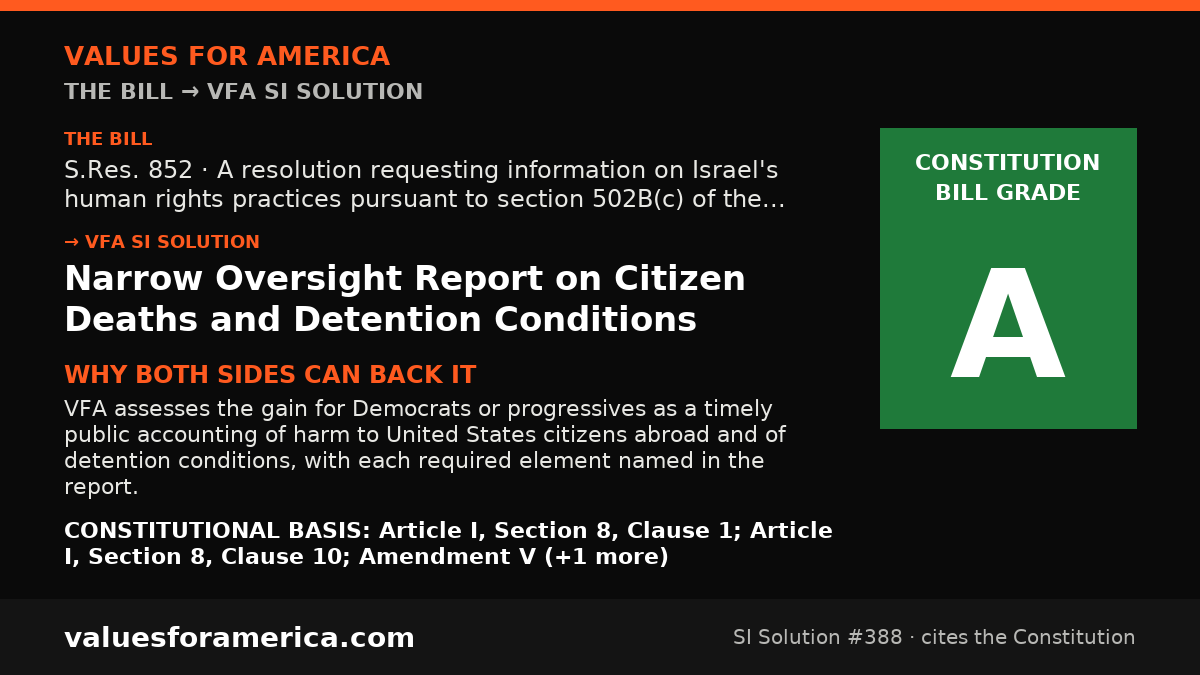
Narrow Oversight Report on Citizen Deaths and Detention Conditions
SI-generated · passed automated checks (Constitution citation, source verification, independent SI critic) · not individually reviewed by a person · Report an error: hello@valuesforamerica.com
Brief for congressional offices →
A resolution requesting information on Israel's human rights practices pursuant to section 502B(c) of the Foreign Assistance Act of 1961.
Narrow Oversight Report on Citizen Deaths and Detention Conditions
Seek a factual United States government account of alleged killings of United States citizens linked to Israeli forces or settlers since 2022 and of related detention conditions. Separate that fact-finding goal from any later decision on security aid.
Constitutional concerns with the original
- Scope and due process: public naming of potential suspects before charge or trial could harm reputation and fairness protected by Fifth Amendment Due Process.
- Federalism limits: findings should inform federal aid and oversight decisions, not direct state action or displace powers reserved by the Tenth Amendment.
Solution text
Operative provisions
Source basis and limits
Basis: The official Congress.gov summary of Senate Resolution 852 in the 119th Congress, which describes a request for an unclassified State Department statement on citizen deaths, suspect identities, investigative steps, detained citizens, and children in military detention, plus the recorded committee discharge motion outcome.
Check before relying on this: The full resolution text, current law under section 502B, eligibility rules, appeal rights, cost effects, and any later action after September 29, 2026 were not shown in the official summary; readers should verify the current text and status at Congress.gov before relying on details.
Bipartisan rationale
VFA assesses the gain for Democrats or progressives as a timely public accounting of harm to United States citizens abroad and of detention conditions, with each required element named in the report. VFA assesses the gain for Republicans or conservatives as protection of the security partnership through regular order, a factual record before any aid decision, narrow scope tied to citizens and oversight, and firm cost and time limits with no automatic change to aid.
Constitutional citations
- → Article I, Section 8, Clause 1
- → Article I, Section 8, Clause 10
- → Fifth Amendment Due Process
- → Tenth Amendment
Article I, Section 8, Clause 1 Article I, Section 8, Clause 10 Amendment V Amendment X
Possible legislative path
In the Senate, members focused on oversight and protection of citizens abroad may support it while members concerned about alliance management and premature findings may oppose or seek changes in committee; in the House, a similar split may center on cost control, regular order, and the strength of the due process safeguards.
Report an error in this Solution

Citizen Consensus
“Do you support this VFA SI Solution?”
One vote per verified account; you can change it any time. Only verified accounts count, results publish once 30 verified people have voted, and state and district results count only people who attested a home ZIP code. How this works.
Email verification is not switched on yet, so no vote counts toward results yet. Votes cast now are saved and count once the voter verifies their email address.
Sign in or create a free account to vote.
Add a short reason (optional)
/280 · no links or contact details · reasons are reviewed before anyone sees them, and many never are shown.
Your vote is saved but held out of published results by an automated integrity check (for example, several accounts voting from one browser).
Your vote is saved. It will count once you verify your email address. Verify on your account page.
Your vote counts nationally. Add your home ZIP code to count in your state and district too.
Your vote counts nationally and in .
Reason saved privately; it is shown only if it passes review.
Verified participants nationwide · n =
Self-selected participants, not a random sample; ± is the 95% sampling margin.
Not enough verified votes yet. Results publish at verified votes.
A sudden surge of votes on this item was flagged and is under review; votes from new accounts in that surge are held out until it is resolved.
Related on VFA
Generated by VFA SI Solutions · 2026.10.12 15:00 UTC · ← Back to the Republic