H.Res. 26 explained · 119th Congress · Pending in Congress
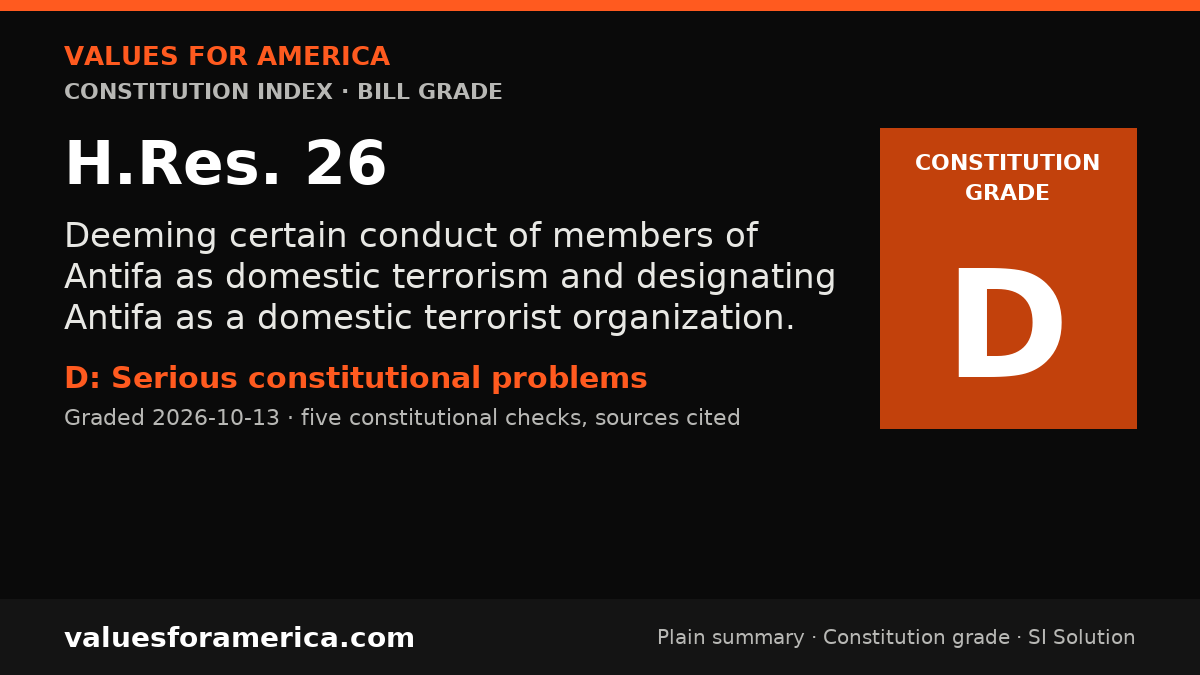
Deeming certain conduct of members of Antifa as domestic terrorism and designating Antifa as a domestic terrorist organization.
Cosponsors: 5 (0 D, 5 R) · per Congress.gov, 2026-10-12
Introduced: 2025-01-09
Latest action (2025-01-09): Referred to the House Committee on the Judiciary.
What H.Res. 26 does, in plain terms
This resolution deems certain conduct of members of antifa as domestic terrorism and designates antifa as a domestic terrorist organization. The resolution calls on the Department of Justice to (1) prosecute crimes of domestic terrorism by antifa, and (2) use all available tools and resources to combat the spread of such terrorism by antifa.
Official summary by the Congressional Research Service, via Congress.gov.
Constitution Index
“VFA Constitution grade”
Serious constitutional problems
Graded 2026-10-13
SI-generated grade · five published checks · not individually reviewed by a person · methodology
This resolution raises significant constitutional concerns. It designates a loosely defined political movement as a 'domestic terrorist organization' without a clear definition or due process, potentially chilling protected First Amendment activity. The call for the Department of Justice to use 'all available tools' could lead to surveillance and prosecution of individuals based on association rather than specific criminal conduct, implicating Fourth and Fifth Amendment protections. While Congress has authority to define crimes, this resolution oversteps by targeting a political ideology rather than specific illegal acts, and it consolidates federal power in a way that undermines individual sovereignty and decentralization.
-
✗ Concern · Enumerated powers
Congress has authority to define and punish crimes under Article I, Section 8, Clause 10 (defining and punishing offenses against the law of nations) and the Necessary and Proper Clause, but this resolution goes beyond defining specific criminal conduct. It designates a broad, loosely defined movement as a terrorist organization, which is not a legitimate exercise of enumerated powers. The resolut… -
✗ Concern · Bill of Rights
The resolution infringes on First Amendment rights to freedom of speech and assembly. Designating 'antifa' as a terrorist organization based on its political ideology and activities, without a clear definition of what constitutes membership or conduct, could chill protected political expression and association. The call for prosecution and use of 'all available tools' could lead to surveillance an… -
✗ Concern · Individual sovereignty
This resolution restricts individuals' freedom of association and political expression without a compelling constitutional justification. It labels a political movement as terrorist, potentially subjecting individuals to government surveillance, prosecution, and social stigma based on their political beliefs or association. The government has not demonstrated a compelling interest that justifies s… -
✗ Concern · Decentralization
The resolution consolidates power at the federal level by designating a domestic political movement as a terrorist organization and directing federal prosecution. This fails the decentralization test: (1) individuals and families cannot handle this; (2) local communities cannot handle this; (3) states could handle domestic terrorism through their own criminal laws, but the resolution preempts stat… -
✗ Concern · Due process and takings
The resolution lacks procedural due process protections. It designates 'antifa' as a terrorist organization without a clear definition, a hearing, or an opportunity for affected individuals to challenge the designation. This could lead to arbitrary enforcement and prosecution without fair notice of what conduct is prohibited, violating the Fifth Amendment's Due Process Clause. The resolution also …
Sources: Congress.gov: HRES 26 summary
Report an error in this grade
What should pass
“VFA SI Solution”
No solution yet
A sourced SI draft appears here once it passes automated checks (Constitution citation, source verification, independent SI critic). How publication works.
Related on VFA

For journalists and bloggers
“Embed this grade”
Free to use with the link back. The badge and card update when the grade changes. Embed terms →
