H.Res. 1560 explained · 119th Congress · Pending in Congress
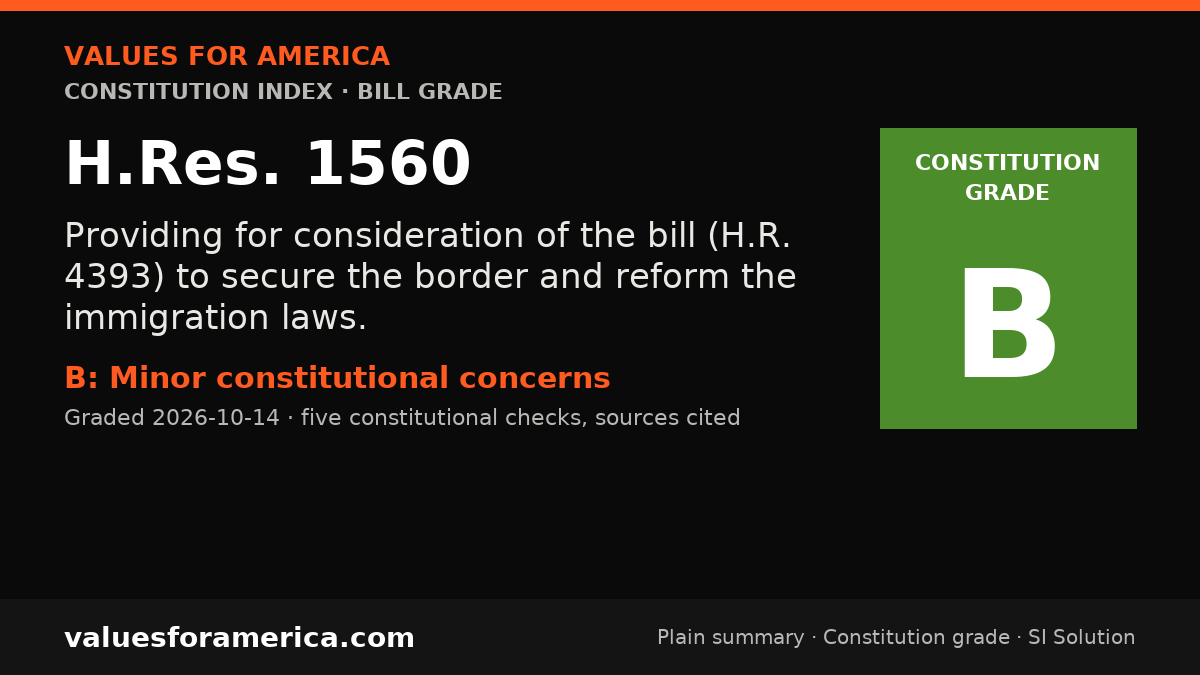
Providing for consideration of the bill (H.R. 4393) to secure the border and reform the immigration laws.
Cosponsors: none · per Congress.gov, 2026-10-14
Introduced: 2026-09-17
Latest action (2026-09-17): Referred to the House Committee on Rules.
What H.Res. 1560 does, in plain terms
This resolution provides for the consideration of the bill (H.R. 4393) to secure the border and reform the immigration laws.
Official summary by the Congressional Research Service, via Congress.gov.
Constitution Index
“VFA Constitution grade”
Minor constitutional concerns
Graded 2026-10-14
SI-generated grade · five published checks · not individually reviewed by a person · methodology
This resolution is a procedural rule governing floor consideration of an immigration reform bill. It does not itself enact substantive policy, so it raises no direct constitutional violation. However, because the underlying bill's content is not specified, the resolution's constitutionality depends on the substance of H.R. 4393. The grade reflects the procedural nature and the potential for the underlying bill to raise significant constitutional issues, particularly regarding federal immigration power and individual rights.
-
✓ Passes · Enumerated powers
Congress has broad authority over immigration and naturalization under Article I, Section 8, Clause 4, and the Naturalization Clause. Additionally, the Necessary and Proper Clause (Article I, Section 8, Clause 18) supports legislation to secure borders and reform immigration laws. A procedural resolution for consideration of such a bill is within Congress's constitutional authority to structure it… -
✓ Passes · Bill of Rights
The resolution itself does not infringe any enumerated right in the Bill of Rights. It merely sets the terms for debate and amendment. However, if the underlying bill contains provisions that restrict speech, assembly, or other rights, those would be evaluated separately. As written, the resolution is neutral and does not implicate the First, Second, Fourth, Fifth, Sixth, Eighth, or Ninth Amendmen… -
✓ Passes · Individual sovereignty
The resolution does not directly restrict individual liberty, property, or labor. It is a procedural measure. The underlying bill, however, could impose restrictions on individuals, but those are not before us. The resolution itself respects individual sovereignty by not imposing any direct burdens. -
✓ Passes · Decentralization
Immigration and border security are inherently federal responsibilities under the Constitution's Naturalization Clause and the federal government's exclusive power over foreign affairs. An individual, local community, or state cannot effectively secure national borders or set uniform immigration policy. The resolution does not consolidate decision-making beyond the federal level; it is the appropr… -
✓ Passes · Due process and takings
The resolution does not bypass due process or take property. It is a procedural rule for legislative consideration. The underlying bill, if it includes provisions affecting immigration enforcement, must comply with the Fifth Amendment's Due Process Clause, but the resolution itself is not subject to that analysis.
Sources: Congress.gov: HRES 1560 summary
Report an error in this grade
What should pass
“VFA SI Solution”
No solution yet
A sourced SI draft appears here once it passes automated checks (Constitution citation, source verification, independent SI critic). How publication works.
Related on VFA

For journalists and bloggers
“Embed this grade”
Free to use with the link back. The badge and card update when the grade changes. Embed terms →
