H.R. 7757 explained · 119th Congress · Pending in Congress
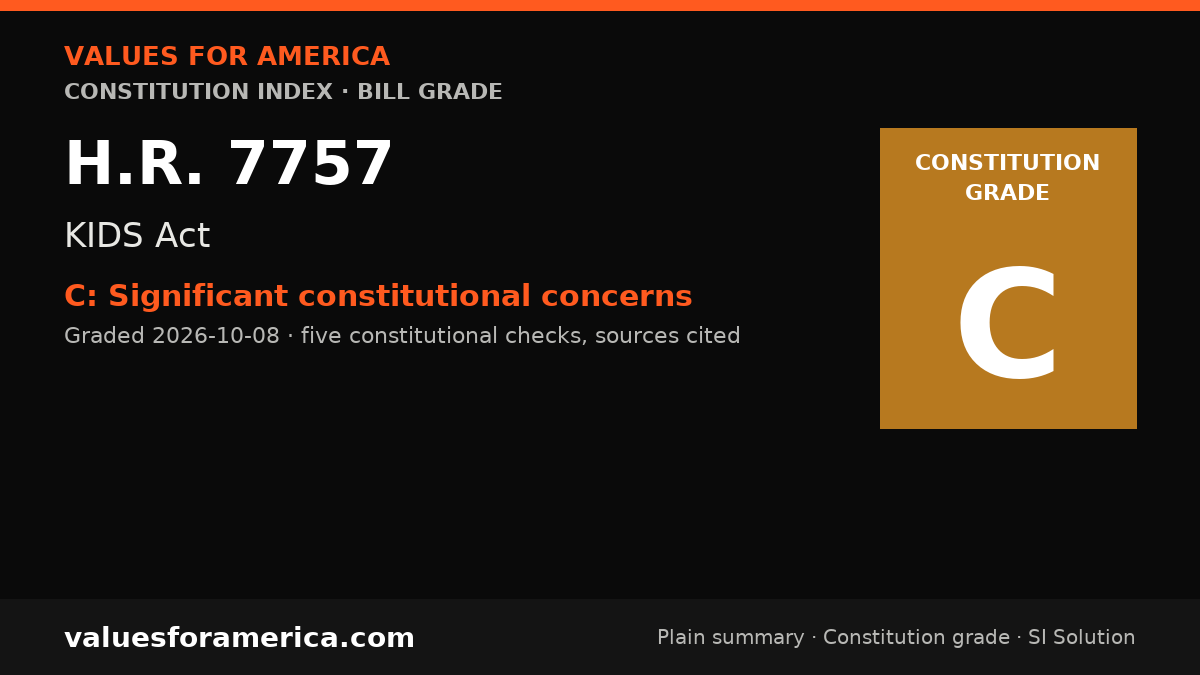
KIDS Act
Cosponsors: 1 (1 D, 0 R) · per Congress.gov, 2026-10-08
Introduced: 2026-03-03
Latest action (2026-07-13): Received in the Senate and Read twice and referred to the Committee on Commerce, Science, and Transportation.
What H.R. 7757 does, in plain terms
Kids Internet and Digital Safety Act or the KIDS Act This bill requires specified online platforms to establish safeguards for minors. The safeguards include (1) limiting access to specified sexual material, (2) providing parental controls on social media and online video game platforms, and (3) requiring artificial intelligence (AI) chatbots to disclose certain information to users who are minors. First, publicly available online platforms on which more than one-third of the content is considered sexual material harmful to minors under the bill must adopt technology to identify minors and prevent them from accessing such material. Next, social media platforms must (1) implement default settings for minors that limit compulsive usage features and the ability of other users to communicate with minors, and (2) provide tools for parents to manage the privacy and account settings of a minor. Social media platforms may not allow ephemeral messaging features for minors. The bill also requires online video game platforms to provide tools that allow parents to (1) limit communication between a minor and other users of the platform, and (2) restrict purchases by a minor on the platform. Further, providers of AI chatbots must disclose to users who are minors (1) that the chatbot is an AI system and not a human, and (2) suicide and crisis intervention hotline information. Finally, the bill requires specified studies and reports about the effects of social media platforms on minors and provides for enforcement of the bill's requirements by the Federal Trade Commission and state attorneys general.
Official summary by the Congressional Research Service, via Congress.gov.
Constitution Index
“VFA Constitution grade”
Significant constitutional concerns
Graded 2026-10-08
SI-generated grade · five published checks · not individually reviewed by a person · methodology
Federal commerce authority exists for interstate platforms, and due process structure is preserved, but the bill imposes broad speech and association limits, mandated identification systems, and federal design standards better handled by parents and states, requiring a narrower rewrite toward parental tools and privacy-protective verification.
-
✓ Passes · Enumerated powers
Congress relies on Article I, Section 8, Clause 3, the Commerce Clause, plus Article I, Section 8, Clause 18 for laws necessary to execute that power. Regulating interstate online platforms, social media, video game services, and artificial intelligence chatbot providers operating across state lines is within interstate commerce authority. No claim of general police power is made, and studies and … -
✗ Concern · Bill of Rights
First Amendment tension: mandatory age-verification to access lawful sexual content burdens adult anonymous speech and press access, see First Amendment and Reno v. structure; ban on ephemeral messaging for minors restricts speech and association; compelled chatbot disclosures are compelled speech subject to First Amendment scrutiny, though disclosure that system is artificial intelligence plus cr… -
✗ Concern · Individual sovereignty
The bill restricts minors and families in how they speak, associate, and use private services, including a categorical ban on ephemeral messaging for minors and default limits on communication with others, implicating liberty protected by the First Amendment and the Ninth Amendment and parental direction of upbringing protected under Fourteenth Amendment liberty. The burden is on the government to… -
✗ Concern · Decentralization
Parents and families cannot fully handle platform design and compulsive features alone, and local counties cannot regulate interstate platforms, so federal baseline has some logic. However states can handle child online safety through consumer protection and parental-rights laws under powers reserved by the Tenth Amendment, and this bill consolidates enforcement and design standards at the federal… -
✓ Passes · Due process and takings
No criminal penalty, presumption of innocence issue, or physical taking described. Enforcement is through Federal Trade Commission and state civil actions, which under Article III and the Fifth Amendment Due Process Clause require notice and opportunity to be heard before liability. Regulatory compliance costs are not a Fifth Amendment taking for just compensation where no property is appropriated…
Sources: Congress.gov: HR 7757 summary
Report an error in this grade
What should pass
“VFA SI Solution”
No solution yet
A sourced SI draft appears here once it passes automated checks (Constitution citation, source verification, independent SI critic). How publication works.
Related on VFA

For journalists and bloggers
“Embed this grade”
Free to use with the link back. The badge and card update when the grade changes. Embed terms →
